No products in the basket.
The 5 Levels of Hoarding: Identification and Guidance for Families
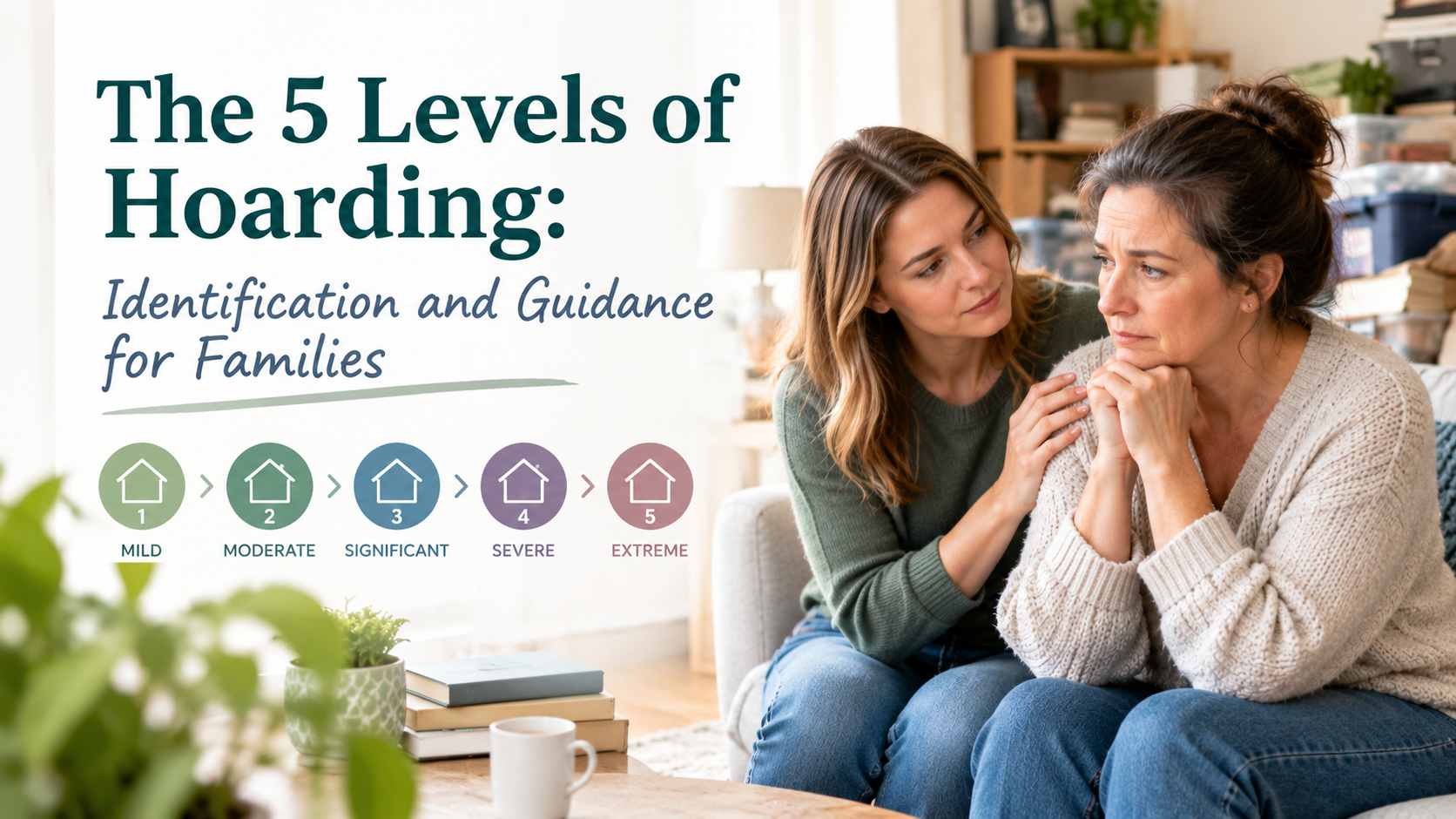
elLiving with or supporting someone with a hoarding disorder can feel completely overwhelming. Therefore, to help a loved one or manage a property safely, it helps to understand the 5 levels of hoarding first.
The Institute for Challenging Disorganization (ICD) categorizes hoarding into five distinct levels. As a result, this clear guide will help you identify each stage and determine when professional support is needed.
What Are the 5 Levels of Hoarding?
Level 1: Mild Clutter
At Level 1, signs of hoarding are subtle and often appear as simple disorganization:
- Living Spaces: All doors, stairways, and entryways remain clear and accessible.
- Environment: Light clutter is present. However, you will not notice any odors or structural issues.
- Behavior: Household occupants might struggle to discard items. Consequently, they may buy unnecessary goods, but daily life still functions normally.
Level 2: Noticeable Accumulation
With Level 2, clutter begins to disrupt normal living functions and social habits:
- Living Spaces: For instance, at least one exit or hallway is partially blocked. In addition, clutter spreads across two or more rooms.
- Environment: Mild odors appear in kitchens or bathrooms. Furthermore, unserviced appliances or light pet waste may be present.
- Behavior: Residents often stop inviting friends or family into the home due to embarrassment. Ultimately, this leads to social isolation.
Level 3: Severe Disorganization & Hazardous Conditions
By Level 3, the property shows clear signs of neglect and potential safety risks:
- Living Spaces: Narrow pathways (“goat trails”) run through rooms. As a result, at least one bedroom or bathroom becomes completely unusable.
- Environment: Heavy dust, pest activity (fleas, spiders, rodents), dirty laundry, and visible grime accumulate across surfaces.
- Behavior: Personal hygiene drops noticeably. Moreover, approaching occupants about the house often triggers defensive or angry reactions.
Level 4: Structural Damage & Unsanitary Conditions
This level presents serious health and safety hazards for occupants and neighbors:
- Living Spaces: Blocked exits, structural damage (leaks, rotting floors), and mildew are widespread.
- Environment: Heavy bug infestations, spoiled food on counters, animal waste, and a lack of clean bedding or kitchen utensils.
- Behavior: Occupants may go weeks without bathing. Therefore, they face high risks of physical illness or injury.
Level 5: Extreme Hazard & Structural Crisis
This is a critical situation requiring immediate professional intervention:
- Living Spaces: Major structural failure, fire hazards, and completely blocked entrances.
- Environment: Loss of basic utilities (no electricity, running water, or working plumbing), severe pest infestations, and human or pet waste inside the home.
- Behavior: Occupants can no longer safely live in the space. Instead, they often stay elsewhere while the property remains filled floor-to-ceiling with clutter.
Need Compassionate, Off-Grid Property Clearance Support?
Clearing a hoarded home requires discretion, patience, and non-judgmental respect. E-Reuse provides fully licensed, sympathetic property clearances across Telford and Shropshire. Specifically, we work closely with families, executors, and local authorities to restore living spaces safely while keeping reusable items out of landfill.
Call or text us in total confidence on 07931 223 733 or explore our dedicated House Clearance Services to learn more.
How to Help a Loved One with Hoarding Disorder
What NOT to Do
- Do not clear items without consent: Forced cleanouts almost always trigger severe distress and rapid relapse.
- Do not demand overnight perfection: Recovery and sorting take time and patience.
- Avoid arguing or shaming: Instead, focus on health and safety rather than the “junk.”
Positive Steps to Take
- Focus on Safety First: Keep doorways and stairways clear of fire hazards.
- Encourage Professional Therapy: Cognitive Behavioral Therapy (CBT) helps address the emotional root of hoarding habits. Learn more about support options on the NHS website.
- Work with Experienced Local Clearance Teams: When the time comes to declutter, use a respectful team that focuses on recycling and ethical disposal rather than simply throwing items in a skip.
Overall, at E-Reuse, we bring over 35 years of local clearance experience to every job, handling every property with empathy, privacy, and care.